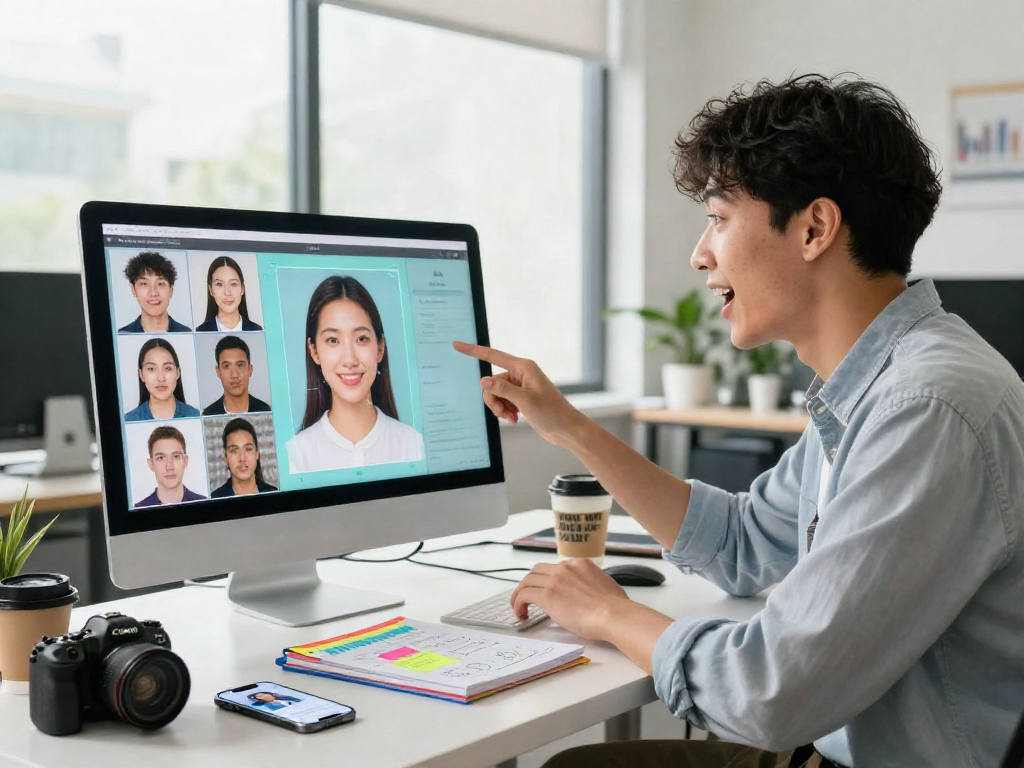
Understanding Age Perception in the Digital Era
In today’s digital landscape, the question of "how old do I look" has gained significant attention. With the rise of artificial intelligence and facial recognition technology, people are increasingly curious about how their appearance correlates with their actual age. Understanding age perception not only influences social interactions but also has implications for self-image and personal branding. The interplay between technology and human perception shapes our understanding of age, making this a fascinating topic for exploration.
What Influences Perceived Age?
Several factors play a crucial role in how we perceive age. These include skin elasticity, facial structure, and even emotional expressions. Cultural norms and societal standards often dictate what is considered youthful or aged, significantly influencing individual perceptions. Additionally, personal experiences and lifestyle choices—such as sun exposure, smoking, and diet—can alter one’s appearance and affect the perceived age as well.
Importance of Facial Recognition Technology
Facial recognition technology has made strides in recent years, providing tools that can estimate age based on various facial features. This technology analyzes depth, texture, and color variations in the skin to determine biological age. Various applications utilize this technology, allowing users to upload photos and receive instant feedback on their perceived age. As a result, platforms focusing on age estimation, such as how old do i look, have become increasingly popular.
How Digital Filters Affect Age Appearance
As social media thrives on filters and editing tools, the impact on age perception becomes more evident. Digital filters can smooth skin, whiten teeth, and alter facial features, often leading to unrealistic portrayals of youth. This can skew our understanding of aging, creating an illusion that leads to dissatisfaction with natural appearances. It is essential to recognize these influences when considering the results from age estimation tools.
The Science Behind Facial Age Estimation
Understanding the intricacies of how technology estimates facial age is crucial. The algorithms used rely on machine learning models trained on thousands of images to recognize patterns associated with different age groups. This section delves into the science behind these estimations and addresses common misconceptions surrounding them.
How AI Analyzes Facial Features
AI systems employ deep learning techniques to evaluate various facial features, including wrinkles, fine lines, and skin texture. The technology scans images to identify signs of aging, comparing these findings against vast datasets. Over time, these models continuously improve, leading to more accurate predictions regarding how old someone appears.
Common Misconceptions About Age Prediction
Despite advancements, there are several misconceptions about age prediction technologies. Some individuals believe that age estimators can provide an exact biological age, not recognizing that these tools are primarily predictive and based on visual algorithms. Understanding these limitations is vital; the results are estimates and can vary significantly based on several factors, including lighting conditions and the quality of the uploaded photo.
Accuracy and Limitations of Current Technologies
While technology has advanced considerably, it is essential to approach the results from age estimation tools with a critical eye. Although many applications claim high accuracy rates, external factors such as skin conditions, makeup usage, or even the angle of a photo may impact the results. Users should consider these elements when interpreting their perceived age.
How to Use Age Estimation Tools Effectively
Utilizing age estimation tools effectively requires an understanding of how they work and the external factors that can influence results. This section offers a step-by-step guide to help users maximize the accuracy of their age estimations.
Step-by-Step Guide to Uploading Photos
To achieve the best results with age estimation tools, follow these simple steps: Start by selecting a well-lit area for your photo. Ensure that the camera is at eye level and facing directly toward you. Avoid using heavy makeup that can obscure facial features. After taking your photo, upload it to the desired tool and follow the prompts to receive your age estimate.
Maximizing Accuracy with Proper Lighting
Lighting plays a critical role in how facial features are perceived. Natural lighting is often the best option, as it reveals the skin's texture and details without harsh shadows. Avoid overhead or artificial lighting, which can distort perceptions. Proper lighting not only enhances the photo quality but also increases the accuracy of the age estimation.
Interpreting Results: What Do They Mean?
The results from age estimation tools can provide insight into how your appearance compares to your actual age. However, it's essential to remember that these results are based on algorithms that generalize patterns from a diverse population. Rather than taking the results as definitive, consider them a fun insight into how you are perceived.
Real-World Applications of Age Estimation
Age estimation technology finds applications across various industries. From marketing to personal branding, understanding how age perception influences consumer behavior can enhance strategies and improve engagement.
Marketing Strategies Using Age Prediction
Businesses increasingly leverage age prediction tools in their marketing strategies. By understanding their target demographics better, brands can tailor messaging and product offerings to appeal to specific age groups. For instance, beauty brands can adjust their advertising to resonate with consumers who are perceived to be younger.
Impact on Social Media and Branding
In the realm of social media, user-generated content is heavily influenced by age perception. Brands often collaborate with influencers whose age aligns with their target audience, seeking to enhance relatability and engagement. Additionally, understanding perceived age can guide brands in their tone and messaging, making them more approachable to certain demographics.
Personal Insights: How Age Perception Influences Self-Image
The results from age estimation tools can influence personal self-image, leading to increased awareness and occasionally anxiety over appearance. Many individuals may feel pressured to maintain a youthful look, especially in today's image-driven society. Recognizing the impact of these perceptions can foster a healthier relationship with one’s self-image.
Future Trends in Age Estimation Technologies
The future of age estimation technologies looks promising, with continuous advancements in AI and machine learning. As our understanding of aging evolves, so too will the tools that help us explore it.
Emerging AI Techniques for Better Accuracy
New AI techniques are on the horizon that promise to improve the accuracy of age estimation tools significantly. These techniques will likely incorporate more nuanced modeling, accounting for diverse factors like ethnicity and lifestyle, leading to more individualized results.
Predictions for Facial Recognition in 2026
By 2026, we can anticipate that facial recognition technology will have matured, providing incredibly precise insights into aging. Innovations may allow for real-time analysis through smartphones, enabling people to engage with the technology on a broader scale and gain instant feedback on their appearance.
Ethical Considerations and Data Privacy Issues
As age estimation technologies continue to advance, ethical considerations and data privacy concerns become paramount. Users must remain vigilant about how their data is collected, used, and shared. Striking a balance between innovation and privacy will be crucial in the development of these tools.
How Accurate Are Online Age Estimators?
The accuracy of online age estimators can vary widely due to several factors. While many tools claim to provide reliable results, it's important to approach them as fun and insightful rather than definitive measures of one’s age. Recognizing the limitations of each platform can help users manage their expectations.
Can Age Estimation Tools Improve Self-Confidence?
Interestingly, while some might feel insecure about age estimates, others may find empowerment in understanding how others perceive them. This newfound knowledge could inspire a positive shift in self-image and encourage individuals to embrace their age, rather than fear it.
What Factors Can Change Your Estimated Age?
Various factors can influence the perceived age, including stress, health conditions, and environmental factors like sun exposure. Recognizing these elements can lead users to make informed decisions about their skincare and overall lifestyle.
How do Social Media Filters Affect Age Perception?
Social media filters can drastically alter age perception, creating unrealistic standards for appearances. Awareness of this distortion is essential for individuals who engage with these platforms, as constant comparison can lead to dissatisfaction with natural looks.
Are AI Tools Reliable for Age Estimation?
While AI tools offer fascinating insights into perceived age, their reliability is not infallible. It's vital to understand that these tools provide estimates, not definitive conclusions. The context and conditions under which the photo was taken play significant roles in the outcomes.